How Wearables Are Changing the Way Athletes Train
TL;DR
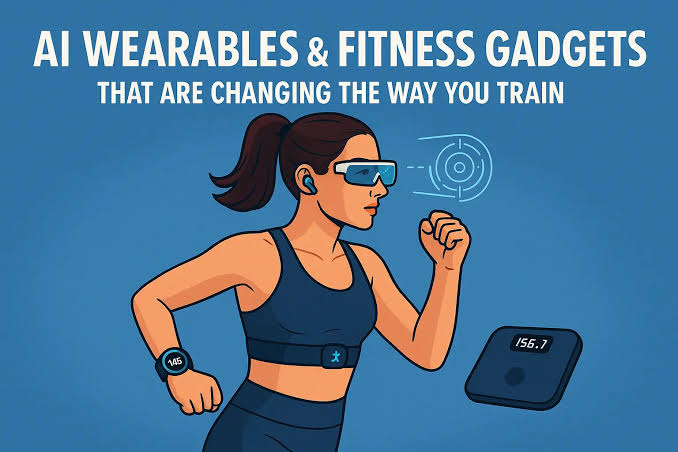
Wearables are changing athlete training by turning workload, recovery, and movement into data that can guide better daily decisions. Their value comes from consistent trends across repeated measurements.
· GPS and motion sensors: show how much work an athlete completed.
· Heart rate and HRV: add context about physiological response and recovery.
· Sleep and readiness scores: are useful for trends but need careful interpretation.
· Injury risk tools: can flag concerning patterns, while injury prediction still carries substantial uncertainty.
· AI: may connect more signals, but coaches and clinicians still need to judge what the data means.
Introduction
Wearable technology in sports is changing how coaches see training stress. An athlete can finish the same workout twice and experience different levels of strain. Wearables help show that difference through movement, heart rate, sleep, and recovery signals. The value comes from patterns across repeated measurements.
That shift is already part of mainstream training. In the American College of Sports Medicine's 2025 trends survey, wearable technology ranked first. The survey included 2,000 clinicians, researchers, and practitioners. Data-driven training technology ranked seventh.
For athletes, the practical change is simple: training decisions can draw on continuous evidence alongside coaching judgment. The hard part is knowing which data deserves trust and which data needs context. It also gives athletes a clearer record of how training stress and recovery change across a season.
What Do Sports Wearables Measure?
Sports wearables collect two broad kinds of information: what the athlete did and how the body responded. The first is often called external load. The second reflects internal load, recovery, and physiological response. No single metric captures the full training picture.
The distinction matters because workload and response are not the same thing. Two athletes can cover the same distance while showing different heart-rate or recovery responses. That gap helps explain why wearable data is most useful when several signals are read together.
Physiological Data
Heart rate sensors show cardiovascular response during exercise. Some devices also estimate heart rate variability, or HRV, which reflects variation between heartbeats. Athletes may track resting heart rate, breathing rate, skin temperature, or oxygen saturation. These measures can help identify trends in exertion and recovery.
Movement and Workload Data
Global positioning system, or GPS, devices can track distance, speed, acceleration, and high-speed running. Inertial measurement units, or IMUs, can capture changes in direction and body movement. Team programs use these signals to compare planned workload with the demands athletes experienced.
Sleep and Recovery Signals
Sleep wearables estimate total sleep time, timing, and sometimes sleep stages. Recovery dashboards often combine sleep with HRV, resting heart rate, and recent workload. A 2025 sports medicine review found that wearables detect sleep reasonably well. They struggle more with quiet wakefulness and early sleep stages. Consumer recovery scores can also be difficult to interpret because their formulas are often opaque.
| Data Type | Common Measures | Training Use | Main Caveat |
| Physiological | Heart rate, HRV, breathing rate | Internal response and recovery trends | Accuracy varies by metric |
| Movement | Distance, speed, acceleration, direction changes | External load and sport demands | Placement and device settings matter |
| Sleep | Sleep time, timing, stage estimates | Recovery context and travel effects | Stages and summary scores can be uncertain |
How Wearables Are Changing Athlete Training Decisions
Wearables change training by giving coaches a record of load and response across days, weeks, and seasons. A 2024 survey of 72 team-sport practitioners found that 87.5% used wearable data to inform training prescription. Only half used it to influence competition decisions.
That difference makes sense. Training is the setting where coaches can adjust volume, intensity, drills, and recovery without changing the goal of competition. A player who logged more high-speed running than expected may get a lighter conditioning block. Another athlete may need more work because the session delivered less load than planned.
The strongest use is comparison against the athlete's own baseline. One hard session rarely tells the whole story. Repeated measures can show whether workload is rising, recovery is lagging, or a planned progression is working.
The same 2024 practitioner survey found that 70.8% viewed GPS technology as important for success. That does not prove the device improves results. It does show how deeply monitoring has entered applied team-sport practice.
How Wearable Data Helps Manage Training Load and Recovery
Wearable data helps coaches manage training load by separating physical work from the athlete's physiological response. External load can include distance or accelerations. Internal response can include heart rate and related signals. Coaches can then ask whether the same workload is becoming easier or harder for the athlete.
Recovery data adds another layer. Sleep duration, resting heart rate, HRV, soreness, and self-reported fatigue can be viewed together. A lower readiness score does not automatically mean an athlete should rest. Travel, illness, heat, stress, and poor sensor contact can change the numbers.
The better approach is trend-based. Coaches can compare several days of data with the training plan and the athlete's feedback. That gives context before changing intensity or recovery time.
Consistency also matters more than novelty. The same device, placement, sampling method, and testing routine should be used whenever possible. Otherwise, a change in measurement conditions can look like a change in the athlete.
Can Wearables Reduce Injury Risk?
Wearables can help teams identify workload patterns that deserve attention. They cannot reliably predict who will get injured during training or competition. Injury risk depends on training exposure, previous injury, tissue capacity, technique, recovery, contact events, and many other factors.
A 2026 review of artificial intelligence and wearables found promise in workload regulation and early identification of maladaptive patterns. The same review stressed that prediction depends on data quality, model validation, context, and practitioner expertise. That is an important limit.
The most useful role is risk management. A sudden workload spike, unusual movement pattern, or persistent recovery decline can trigger a closer review. Medical staff and coaches still need to decide what the signal means. Wearable output should support that process while people keep decision authority.
GPS, HRV, and the Metrics Athletes Use Most
Athlete wearable metrics are useful when they match the sport, training goal, and question a coach needs to answer. A strong measure is repeatable, understood by staff, and connected to a decision. Collecting more variables does not automatically improve the program.
· GPS distance and speed: Useful in field and team sports for total distance, sprint exposure, and high-speed running. GPS data helps compare training sessions with competition demands.
· Heart rate: A direct view of cardiovascular response during exercise. Heart rate is among the better-validated wearable measures, although movement and device placement can still affect readings.
· Heart rate variability: Often measured at rest to track autonomic trends. HRV can add context to recovery, but coaches should compare it with the athlete's baseline and other signals.
· Accelerations and impacts: IMUs and accelerometers can capture rapid changes in movement and mechanical load. Interpretation depends on sensor placement, device model, and the sport.
· Sleep and recovery trends: Useful for spotting changes in sleep timing or duration across travel and heavy training blocks. Stage estimates and composite recovery scores deserve more caution.
Where Wearable Technology in Sports Still Falls Short
Wearable technology can generate precise-looking numbers without guaranteeing precise meaning. A 2026 systematic review of 11 team-sport studies found that heart rate monitoring showed strong validity across devices. Energy expenditure estimates were far more variable, especially during high-intensity and intermittent work.
Several limitations matter in daily training.
· Accuracy varies: Different sensors perform differently across metrics and environments. A device that measures heart rate well may still estimate energy expenditure poorly.
· Algorithms are hidden: Many consumer platforms combine signals into one readiness or recovery score. Coaches may not know how the score was weighted or changed after a software update.
· Context can be missing: Wearables do not know every reason a metric changed. Heat, travel, stress, illness, caffeine, and poor sensor contact can all alter the reading.
· Data can overwhelm: More metrics create more chances to chase noise. Teams need a small set of measures tied to training decisions and clear review rules.
· Privacy matters: Biometric and performance data can be sensitive. NCAA guidance for collegiate athletics calls for attention to privacy, mental health, informed consent, and data security.
How Athletes and Coaches Can Use Wearable Data More Effectively
Wearable data works best when a program starts with a training question. Dashboards come later. The goal is to collect fewer measures that lead to clear decisions. Coaches also need consistent routines for collection and review. A simple workflow keeps the technology useful.
· Define the question: Pick a specific goal, such as sprint exposure, recovery, endurance work, or another training demand.
· Choose validated measures: Use metrics with acceptable reliability for the sport and setting. Do not assume every number on the dashboard has equal accuracy.
· Build a baseline: Collect data consistently before treating a change as meaningful. Personal trends are usually more useful than comparisons with another athlete.
· Add athlete feedback: Combine sensor data with soreness, fatigue, sleep quality, and coach observation. Subjective information can explain changes that a wearable cannot.
· Review decisions: Track whether adjustments improved performance, recovery, or availability. If a metric never changes a decision, reconsider why the program collects it.
What AI Could Change About the Next Generation of Sports Wearables
Artificial intelligence can combine movement, physiological, sleep, and training-history data faster than a coach can review each stream separately. That may make wearables more useful for individualized workload planning, recovery estimates, and return-to-play support. It can also help surface relationships across several data streams.
A 2026 review covering 57 studies found that AI-supported wearable systems can help with training prescription and workload regulation. The authors also warned about privacy, model transparency, weak validation, and over-reliance on automated outputs. Their preferred model keeps a human in the loop.
That direction matters. The next step is software that explains patterns, shows uncertainty, and helps a qualified coach or clinician ask better questions. The device should support judgment rather than make every decision.
The Road Ahead
Wearables are changing athlete training because they make workload and recovery easier to observe over time. Their best use is disciplined and selective. Athletes need consistent measurement, clear baselines, and people who understand the sport behind the data. That combination matters more than any single score.
As of September 2026, wearable technology in sports is moving toward richer sensors and AI-assisted interpretation. The advantage will still come from turning reliable signals into sound training decisions, while ignoring metrics that add noise.
FAQs
Are Consumer Smartwatches Accurate Enough for Serious Athletes?
Consumer smartwatches can be useful for trends, especially heart rate and basic activity data. Accuracy varies by metric, device, activity, and setting. Serious athletes should avoid treating calorie estimates, sleep stages, or a single readiness score as exact. Consistent use and comparison with validated testing can make consumer data more useful.
Do Athletes Need to Wear a Tracker All Day?
Athletes do not need continuous tracking for every training goal. Some measures require specific periods, such as GPS during practice or HRV under consistent resting conditions. All-day wear can add sleep and recovery context, but it also creates more data. The useful amount depends on the decision the athlete or coach needs to make.
Can Wearables Replace Lab Testing for Athletes?
Wearables cannot fully replace laboratory testing because field devices trade some control for convenience and continuous data. Lab tests remain useful for measures that need standardized conditions or reference equipment. Wearables suit repeated monitoring between tests. Changes across normal training can reveal patterns that one lab visit may miss.
How Often Should Athletes Review Wearable Data?
Athletes should review wearable data at a cadence that matches the metric and training plan. Session load may be reviewed after practice, while recovery trends need several days of context. Frequent checking can become distracting when normal variation is treated as a problem. Coaches should set clear review points and thresholds before collecting data.
Who Owns an Athlete's Wearable Data?
Ownership and access depend on the device, team, contract, school policy, and applicable law. Athletes should know what is collected, who can see it, and how long it is stored. They should also know whether the data can be shared. In U.S. collegiate athletics, NCAA guidance highlights informed consent, privacy, mental health, and data security.
Amrit Mehra
Tech Journalist, Content Writer | TecKnowHowDedicated to providing insightful technology analysis and deep coverage of the latest innovations shaping our global ecosystems.
Liked what you read? That's only the tip of the tech iceberg!
Explore our vast collection of tech articles including introductory guides, product reviews, trends, news, interviews and AI blogs, stay up to date with the latest news, relish thought-provoking interviews and the hottest AI blogs.
Dive into TecKnowHow's treasure trove today and Know Your World of technology like never before!
Disclaimer — Reference to any specific product, software or entity does not constitute an endorsement or recommendation by TecKnowHow nor should any data or content published be relied upon.